About Surbhi Arorra
I've spent my career on one question: how products actually reach the people they're meant for. Learned distribution on the ground at Reckitt across modern trade, general trade and rural India, then built growth, brand and partnerships from scratch inside early stage startups. What I care about most sits where growth, distribution and consumer behaviour meet.
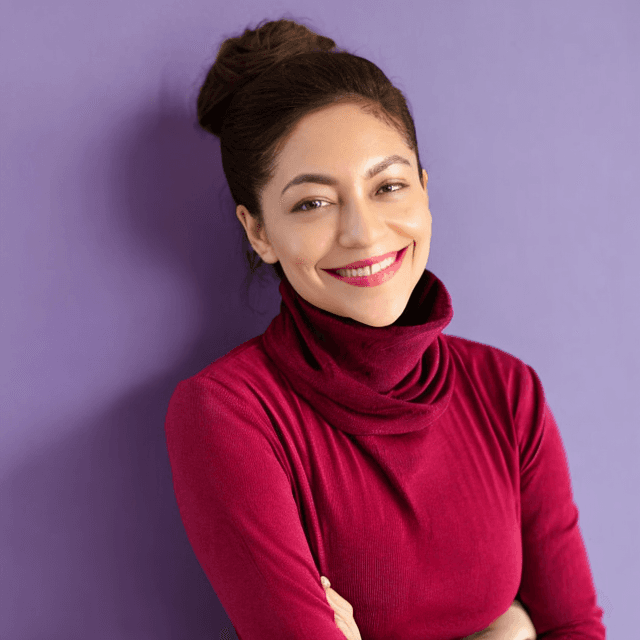
My Story
If there's a thread running through my career, it's that I'm drawn to building. I like the early, undefined stage, where nobody has the answers yet and someone has to go and find them. That's the kind of work that has always pulled me in.
I studied Economics at Delhi University, did my MBA at Bennett, and later an executive program at Wharton. All of it was useful, but the real education came from the work itself.
It started at Reckitt, where I was selected for their Sales Leadership Program. What made it extraordinary was how often everything changed. Every few months my channel, my territory and my team would shift completely. One stretch I'd be selling into small mom and pop stores, the next into supermarkets, then into modern trade accounts like DMart and Wellness Forever. One month I'd be in Bandra, the next in the remotest villages around Ujjain, working out why our products weren't reaching people there and what the sales teams on the ground actually needed. Across all of it I was selling the health portfolio and negotiating everything from shelf visibility to order volumes to merchandising and new launches. The sheer breadth and depth of it in such a short window was insane, and it taught me the thing my whole career still sits on: distribution is the game. Even a great product, on the wrong shelf, simply dies.
After Reckitt I wanted to be closer to the actual building, so I joined Xfinite, an early stage OTT startup, working out of the CEO's office. That meant a bit of everything: pulling together investor material, chasing partnerships with airlines, Coca Cola and content studios, helping scale the team, and onboarding the platform's first 100,000 users. It was the first time I watched a company being built from the inside, and I was hooked.
Soon after, I went and started my own marketing agency, where we ran a storytelling campaign for the Times of India and worked with a number of early stage startups. Alongside it I was building a product of my own, Drops, an audio edtech app.
Drops didn't work, and I know exactly why. I'd mistaken my own excitement for real demand. I wanted the product to exist so much that I assumed everyone else did too, and I started building before I'd properly checked whether the market agreed with me. There was very little real research behind it and a lot of gut, and gut is a poor way to learn whether people will actually pay for something. I could see fairly early that it wasn't landing, and I made the call to shut it down. It left me with a lesson I've carried into everything since: loving an idea and there being a real market for it are two completely different things, and I'm careful never to confuse them now.
Around the same time, Covid hit hard. I'd already signed and prepaid for office space, and once the restrictions came in that money was simply gone, stuck and unrecoverable, which put real strain on the agency. Not long after, my dad fell seriously unwell, and I stepped away from work to be with him. I wound the agency down.
When I came back, I joined DaoLens as their second employee and built their brand and marketing from scratch. There was nothing in place yet, so I got to shape what it became. Since then I've run my own agencies and worked closely with founders, almost always on the same question in a different form: how do good products actually find the people who want them?
These days I'm a lot pickier about what I say yes to. Not because the options are thin, but because I've done enough now to know what's worth my time and what isn't. The work has to be real, the problem has to be interesting, and the people have to be ones I actually want to spend my days around.
How I build my perspective?
My perspective evolves more than I'd have expected it to, and over time I've learned to welcome that rather than resist it. A lot of it comes from reading, which has always been a bit of a rabbit hole for me. Just as much comes from the people around me, who are generous with their honesty and good at pushing me to see what I might be missing. Travel does something similar. Being somewhere unfamiliar has a way of quietly rearranging how I look at things. I also believe you become the average of the people you spend the most time with, so I'm intentional about that. I seek out dinners, summits and smaller gatherings where I can meet people from very different walks of life, hear their stories, and mostly just listen.